Published May 4, 2026
Pre Buyer Consultation

Everything You Need to Know Before Buying a Home
A Complete Guide from Alexander Ramirez with eXp Realty
Before we ever step inside a home together — and before we sit down for your Buyer Consultation — I want you to have everything you need to feel confident, informed, and fully prepared.
This guide covers the entire home buying process from start to finish: how financing works, what documents you need, how I search for homes on your behalf, what happens from offer to closing, how I get paid, and what kind of agreement we sign together. By the time you finish reading, you will know exactly what to expect — and our consultation can focus entirely on your goals.
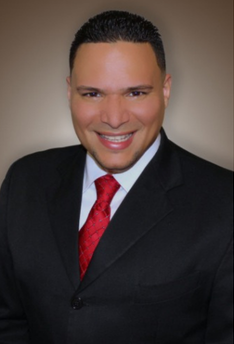
Meet Alexander Ramirez
I am a licensed Real Estate Salesperson with eXp Realty — one of the fastest-growing, technology-forward brokerages in the country. I serve buyers across the Hudson Valley (Westchester, Putnam, and Dutchess Counties), Rockland County, Orange County, and New York City.
I work with first-time homebuyers, repeat buyers, investors, and renters — and I provide full service in both English and Spanish. My approach is straightforward: I treat every client with the same urgency, transparency, and care I would give my own family.
eXp Realty backs every transaction with cloud-based technology, a nationwide agent network, and full compliance support — which means you get the resources of a major brokerage with the personal attention of a dedicated local agent.
Your Home Buying Roadmap
The home buying process can feel overwhelming if you don't know what's coming. Here is the full journey — laid out clearly so there are no surprises.
If You Are Financing Your Purchase
Step 1 — Buyer Consultation We meet in person or virtually to discuss your goals, timeline, budget, and must-haves. You've already read this guide, so we skip the basics and go straight to your specific situation.
Step 2 — Mortgage Pre-Approval You connect with a trusted lender and receive a pre-approval letter. This defines your buying power and signals to sellers that you are a serious, verified buyer.
Step 3 — Home Search I set up a customized MLS search that alerts you the moment qualifying listings hit the market. We schedule targeted showings — up to 3 properties per day — based on your criteria.
Step 4 — Making an Offer When you find the right home, I prepare and submit a strategic offer on your behalf. Every term — price, contingencies, closing timeline — is negotiated intentionally.
Step 5 — Under Contract Offer accepted. Your attorney reviews the contract, inspections are scheduled, and we begin managing every deadline carefully.
Step 6 — Mortgage Processing Your lender processes the full loan application. Stay responsive — you may be asked for additional documents, and timing is critical at this stage.
Step 7 — Lender Appraisal Your lender orders an independent appraisal to confirm the property value supports the loan amount. If the appraisal comes in low, I walk you through your options.
Step 8 — Clear to Close Your lender issues final loan approval. Your attorney coordinates the closing date, time, and location with all parties.
Step 9 — Final Walk-Through We tour the property one last time — typically 24 hours before closing — to confirm everything is in the agreed condition.
Step 10 — Closing Day You sign the final loan documents, pay closing costs, and receive your keys. Congratulations — you're a homeowner.
If You Are Purchasing With Cash
Cash buyers move on a significantly faster timeline. Without a lender involved, a cash transaction can close in as little as 2 to 3 weeks from accepted offer — compared to the 45 to 60 days typical of a financed purchase. There is no mortgage application, no underwriting, no lender appraisal, and no clear-to-close waiting period.
Step 1 — Buyer Consultation We meet to discuss your goals, target areas, and criteria. Since you've read this guide, we go straight to strategy.
Step 2 — Proof of Funds You provide a current bank or brokerage statement confirming available liquid funds. This replaces the pre-approval letter and is required with every offer you submit.
Step 3 — Home Search I set up your customized MLS search and schedule targeted showings — up to 3 per day — focused on your investment goals and property criteria.
Step 4 — Making an Offer I submit your clean cash offer with Proof of Funds attached. Cash offers are highly attractive to sellers. I use this leverage strategically to negotiate the best price and terms — having cash does not mean overpaying.
Step 5 — Under Contract Offer accepted. Your attorney reviews and countersigns the contract. With no lender delays, this phase moves quickly.
Step 6 — Home Inspection Strongly recommended even without a lender requirement. A professional inspection protects your investment and may uncover negotiating opportunities before closing.
Step 7 — Title Search and Title Insurance Your attorney conducts a title search to confirm clear ownership. Title insurance protects you from prior liens, claims, or disputes going forward.
Step 8 — Final Walk-Through We tour the property one last time to confirm everything is in agreed condition before funds are transferred.
Step 9 — Closing Day You sign the closing documents, funds are wired or certified, and you receive your keys — often within 2 to 3 weeks of your accepted offer.
Understanding Your Buying Power
Before you fall in love with a home, you need to know what you can confidently afford. That process starts with a mortgage pre-approval — not a pre-qualification.
A pre-qualification is a quick estimate based on self-reported financial information. It carries little weight with sellers. A pre-approval involves a full review of your credit, income, and assets by a lender. It tells sellers you are a serious, verified buyer and gives us real negotiating power from the moment we submit an offer.
Your pre-approval letter defines your price ceiling, estimated monthly payment, and loan program eligibility. I can connect you with trusted local lenders if you need a recommendation.
Documents You Will Need for Pre-Approval
To get pre-approved, gather the following before meeting with a lender:
- Pay stubs — Most recent 30 days for all employed borrowers
- W-2s and federal tax returns — Last 2 years
- Bank statements — Last 2 to 3 months for all checking, savings, and investment accounts
- Employment history — 2-year history; be prepared to explain any gaps
- Debt overview — Car loans, student loans, credit cards, and child support obligations
- Government-issued ID — Driver's license or passport for all borrowers
If you are self-employed, you will also need profit and loss statements and business bank statements, typically covering the past 2 years.
If you are a cash buyer, you do not need a pre-approval — but you will need a current Proof of Funds letter or bank statement ready to attach to every offer.
Financing Programs Available to You
There is no one-size-fits-all mortgage. Depending on your income, credit history, military service, and the location of the property, you may qualify for programs with low or even zero down payment requirements. Here is a breakdown of the most common options for buyers in our market.
FHA Loan
Backed by the Federal Housing Administration, FHA loans are ideal for buyers with limited savings or those rebuilding credit. You can put down as little as 3.5% with a credit score of 580 or above, or 10% with a score between 500 and 579. FHA loans have more flexible debt-to-income guidelines and allow gift funds from family members. Be aware that FHA loans require mortgage insurance for the life of the loan in most cases, and county loan limits apply — Westchester County's limits are significantly higher than the national baseline.
Conventional Loan
Not government-backed, conventional loans follow Fannie Mae and Freddie Mac guidelines. First-time buyers may qualify for as little as 3% down through certain programs, though 5 to 20% is standard. If your down payment is below 20%, private mortgage insurance (PMI) applies — but it is automatically removed once your loan-to-value ratio reaches 80%. Most lenders require a minimum credit score of 620, with the best rates reserved for scores of 740 and above. High-cost areas like Westchester and New York City have elevated conforming loan limits, allowing you to finance more without moving to a jumbo loan.
VA Loan
Available exclusively to eligible veterans, active-duty service members, and surviving spouses, VA loans are one of the most powerful mortgage benefits in existence. There is zero down payment required, no private mortgage insurance, and rates are consistently competitive. A Certificate of Eligibility (COE) is required, and a one-time VA funding fee applies — but it can be rolled into the loan. If you have served, we explore this option first.
USDA Rural Development Loan
A zero-down loan backed by the U.S. Department of Agriculture for buyers purchasing in eligible rural or suburban areas. Income limits apply based on household size, and the property must be located in a USDA-eligible zone. Many areas in Dutchess County, Orange County, and parts of Putnam and Rockland County qualify — including areas that may surprise you. We always check the USDA eligibility map before ruling this option out.
SONYMA — State of New York Mortgage Agency
SONYMA offers below-market 30-year fixed interest rates for qualifying New York State buyers. Their Down Payment Assistance Loan (DPAL) provides up to $15,000 or 3% of the purchase price — whichever is greater — to help cover the down payment. Income and purchase price limits apply by county, and first-time buyer status is generally required (with some exceptions). SONYMA partners with approved lenders only. I work with lenders who are experienced in SONYMA origination.
HomeFirst Down Payment Assistance — New York City
Administered by the NYC Department of Housing Preservation and Development, the HomeFirst program offers eligible first-time buyers up to $100,000 in down payment and closing cost assistance for properties purchased within the five boroughs. Income limits apply based on household size, and a homebuyer education course is required. The assistance becomes a forgivable grant after a required period of owner-occupancy — making it one of the most generous buyer programs available in the New York market.
Cash Purchase
If you are purchasing with cash, you bypass the lender entirely. There is no mortgage application, no underwriting process, no lender appraisal requirement, and no financing contingency. Cash offers are among the most attractive to sellers because they eliminate financing risk and compress the closing timeline dramatically. That said, cash does not mean skipping due diligence. I still run a full Comparative Market Analysis before every offer, and I strongly recommend a home inspection and independent appraisal to protect your investment.
Even as a cash buyer, you will still need: Proof of Funds for every offer, a real estate attorney, a home inspection, title insurance, homeowners insurance, and funds to cover transfer taxes and closing costs.
The Home Search Process
Once you are pre-approved — or have your Proof of Funds ready — and we have signed a buyer agreement, the real search begins. My job is to save you time, protect your energy, and keep your focus on properties that genuinely match your criteria.
Here is how I manage the search process on your behalf:
I set up a customized MLS search that notifies you the moment qualifying listings hit the market. I preview and filter listings so you only see the ones worth your time. I schedule and coordinate all showings — you simply show up. At each showing, I walk you through what to look for: structure, systems, neighborhood conditions, and red flags. After each showing day, we debrief and refine the search criteria based on what resonated. I track comparable sales and market data to inform every decision we make.
The 3-Showing Rule
I cap our showings at 3 properties per day — and the reason is intentional. More than 3 showings in a single day leads to decision fatigue, blurred memories, and rushed choices. By limiting our focus, each property gets your full attention and a fair evaluation. You walk away with clarity, not confusion.
What to Look for at Every Showing
- Foundation condition, roof age, and structural integrity
- HVAC system, water heater, and electrical panel age
- Signs of water damage, mold, or settling
- Natural light, layout flow, and storage capacity
- Neighborhood — traffic, noise levels, and walkability
- School district quality and proximity to your daily needs
Making an Offer
When you find the right home, speed and strategy matter. I prepare and submit offers that are competitive, clean, and structured to win — without overpaying.
Before writing anything, I pull a Comparative Market Analysis using recent comparable sales to determine fair market value. Every term in the offer is considered: price, earnest money deposit, contingencies, closing timeline, and any included personal property. Contingencies — inspection, financing, and appraisal — are there to protect your deposit. I advise on which to include and when, based on market conditions and the specific property.
If the seller counters, I guide your response using market data and negotiation strategy — not emotion.
Once your offer is accepted: the executed contract goes to your attorney immediately; your deposit (typically 10% of the purchase price) is due within the contract timeframe; your mortgage application is submitted to your lender; your home inspection is scheduled within the contingency window; and your attorney begins the title search.
My negotiation philosophy is simple — I negotiate based on data, market conditions, and the seller's motivations. My goal is to get you the best terms possible while keeping the deal alive and moving forward.
Contract to Closing
Once you are under contract, several key milestones must be completed before you can close. Here is what happens and when.
Attorney Review and Contract Signing — Your real estate attorney reviews all contract terms, negotiates any riders or modifications, and countersigns. This phase typically takes 3 to 7 business days.
Home Inspection — A licensed inspector evaluates the property's structure, systems, and overall condition. Based on the findings, we may negotiate repairs or seller credits before proceeding.
Appraisal — For financed purchases, your lender orders an independent appraisal to confirm the property value supports the loan amount. If the appraisal comes in below the purchase price, your options include renegotiating the price, making up the difference in cash, challenging the appraisal with supporting data, or walking away within your contingency window. I will guide you through the best path.
Title Search and Title Insurance — Your attorney searches the property's ownership history for liens, easements, or any claims. Title insurance protects you as the new owner going forward.
Final Walk-Through — Typically 24 hours before closing, we verify the property is in the agreed condition, all included items remain, and no new damage has occurred.
Closing Day — You sign the final documents, pay your closing costs, and the property is legally transferred to you.
Pre-Closing Costs to Budget For
These costs are separate from your down payment and are due before or at closing. Budget for them early in the process.
- Home Inspection — $400 to $700, paid the day of the inspection
- Appraisal Fee — $500 to $800, typically charged when the loan application is submitted
- Homeowners Insurance (Year 1) — $1,200 to $3,500 or more, paid in full at closing
- Real Estate Attorney — $1,500 to $3,000, paid at closing; required in New York
- Title Insurance — $1,500 to $3,500 or more depending on purchase price, paid at closing
- Mortgage Origination and Lender Fees — $1,000 to $3,000 covering application, underwriting, and processing
- Prepaid Taxes and Escrow Setup — Varies; your lender collects a reserve for property taxes
Total closing costs in New York typically range from 2% to 5% of the purchase price. Your lender is required to provide a Loan Estimate (LE) within 3 business days of your application, which will outline all expected costs.
Commission and How I Get Paid
Real estate compensation has undergone significant changes. You deserve to understand exactly how this works before we do anything together.
Under the traditional model, sellers paid a total commission — typically 5% to 6% of the purchase price — that was split between the listing agent and the buyer's agent. Buyers rarely saw or signed any documentation related to that compensation.
As of August 2024, following the NAR settlement, buyer agent compensation must be agreed upon in writing before any homes are shown. Sellers are no longer required to offer buyer agent compensation through the MLS.
In practice, many sellers continue to offer buyer agent compensation as part of the deal structure, and I negotiate for this on your behalf in every transaction. In many cases, you will pay nothing out of pocket for my services.
If seller compensation is not offered or is insufficient, my compensation will have already been discussed, agreed upon, and documented in our Buyer Representation Agreement before we move forward together. There will be no surprises — ever.
Disclosure Forms and Buyer Agreements
New York law requires that agents present an Agency Disclosure Form before any substantive conversation about your home search. Understanding agency is not just a legal formality — it directly affects whose interests are being represented in every interaction.
Agency Relationship Types
Buyer's Agent — I represent you with full fiduciary duties: loyalty, confidentiality, full disclosure, obedience to lawful instructions, and reasonable care. This is the relationship I maintain when you sign an Exclusive Right to Represent agreement with me.
Seller's Agent (Listing Agent) — This agent represents the seller's interests only. They are legally obligated to get the best outcome for the seller. Do not share your negotiation strategy, maximum budget, or motivation with a seller's agent.
Disclosed Dual Agent — When the same agent or brokerage represents both buyer and seller in one transaction. Both parties must provide written informed consent. Fiduciary duties to each party are limited in this arrangement.
Designated Sales Agent — The brokerage represents both sides, but assigns separate individual agents to each party to reduce the conflict of interest. Written disclosure and consent are still required.
Buyer Agreement Types
Exclusive Right to Represent — You agree to work solely with me for the term of the agreement. I owe you full fiduciary duties and am fully committed to your search. Commission is owed to me regardless of who finds the property — including if you find it yourself. This is the agreement I recommend for all clients and the one I work under. It provides the highest level of buyer protection available.
Exclusive Agency — You work exclusively with me, but if you independently find a property — for example, directly through a FSBO seller without my involvement — no commission is owed. I still provide full fiduciary representation throughout the agreement term.
One-Day Exclusive Agency Agreement — A short-term exclusive agreement typically signed before a single showing or showing day. Commission applies only to properties shown that day. This became common practice following the 2024 NAR settlement, as buyers are now required to sign some form of agreement before tours. It allows you to experience working with me before making a longer-term commitment.
Non-Exclusive Buyer Agency — You may work with multiple agents simultaneously. Commission is only paid to the agent who is the direct procuring cause of the purchase. This arrangement offers less structure, less continuity of representation, and no guarantee that any agent is fully advocating for your interests at any given moment.
Why Alexander Ramirez with eXp Realty
Buying a home is likely the largest financial decision of your life. You deserve an agent who arrives to every conversation with knowledge, preparation, and genuine care for your outcome — not someone who simply unlocks doors.
Here is what I bring to every transaction:
- Deep market knowledge across the Hudson Valley, Rockland County, Orange County, and New York City
- Proactive communication — you will always know what is happening and what comes next
- A trusted network of attorneys, lenders, inspectors, and insurance professionals
- Negotiation grounded in data and strategy, not pressure or emotion
- Bilingual service in English and Spanish
- Full support from our first conversation through closing day — and beyond
In return, I ask that you commit to our working relationship through an Exclusive Right to Represent Agreement, communicate openly and honestly, arrive pre-approved before we begin touring, and trust the process. The more I know about your goals, the better I can serve them.
Frequently Asked Questions
How long does the home buying process take? From accepted offer to closing typically takes 45 to 75 days for a financed purchase in New York, depending on loan type, attorney scheduling, and the seller's circumstances. Cash purchases can close in 2 to 3 weeks. The search phase varies widely — some buyers find the right home within weeks; others take a few months.
How much do I need for a down payment? It depends on your loan program. VA and USDA loans offer zero down. FHA requires as little as 3.5%. Conventional loans start at 3% for qualifying buyers. SONYMA and HomeFirst programs provide down payment assistance for eligible buyers. We review the best option for your specific situation during our consultation.
Do I need a real estate attorney in New York? Yes. New York is an attorney-review state. A real estate attorney reviews and negotiates your purchase contract, conducts the title search, and attends your closing. Attorney fees typically range from $1,500 to $3,000 and are paid at closing.
What if the appraisal comes in below the purchase price? You have several options: negotiate with the seller to reduce the price to the appraised value, pay the difference in cash (an appraisal gap), formally challenge the appraisal with comparable data, or walk away within your appraisal contingency window without penalty.
Can I buy if I have student loans or other debt? Yes. Having debt does not disqualify you. Lenders evaluate your Debt-to-Income (DTI) ratio. Many loan programs allow DTI ratios up to 43% to 57% depending on the program and compensating factors. A lender will review your full financial picture to determine what you qualify for.
What is the difference between a condo and a co-op? A condo is real property — you own your unit outright. A co-op means you own shares in a corporation that owns the building and hold a proprietary lease on your unit. Co-ops often have stricter board approval processes and more limited financing options. Both are common across our market, especially in New York City and lower Westchester.
Can I back out after signing a contract? Once contracts are fully executed in New York, exiting becomes more difficult and potentially costly. However, properly structured contingencies — inspection, financing, appraisal — provide legal pathways to exit without forfeiting your deposit if specific conditions are not met. This is why having an experienced attorney and well-drafted contingencies matters from the start.
What credit score do I need? FHA accepts scores as low as 580 (3.5% down) or 500 (10% down). Conventional loans generally start at 620, with best rates at 740 and above. VA and USDA loans do not set a minimum score, but most lenders require 620 or higher. If your credit needs work before we begin, I can connect you with a credit counselor.
Is it better to buy or keep renting? That depends on your financial stability, personal timeline, and long-term goals. Buying builds equity and locks in your housing cost, but requires upfront capital and a commitment to staying put. I will not push you to buy before you are ready. My job is to give you honest information so you can make the best decision for your life — not my commission.
How do I get started? Contact me directly to schedule your Buyer Consultation. Come with your questions, your goals, and an open mind. Since you've read this guide, we can skip the basics and spend our time on what matters most — your path to homeownership.
Let's Talk
You've done the work of preparing. Now let's sit down and make it happen.
Alexander Ramirez Licensed Real Estate Salesperson eXp Realty Serving the Hudson Valley · Rockland County · Orange County · New York City
📞 (914) 229-8193 ✉️ alexander.ramirez@exprealty.com 🌐 alexprestigerealty.com
Alexander Ramirez is a Licensed Real Estate Salesperson with eXp Realty. This guide is provided for educational purposes and does not constitute legal or financial advice. All buyers are encouraged to consult with a licensed attorney and financial advisor. Equal Housing Opportunity.